

Welcome to Unregulated to Regulated — my small corner of the internet where I write about rebuilding the nervous system, stress management, invisible illness, recovery, and learning how to live slowly in a culture addicted to speed.
Short Synopsis
Becoming a zoo docent turned out to be much deeper than I expected. What began as learning about animals became an experience of safety, attention, and nervous system repair. This piece explores what it means to slow down enough to truly observe—and how nature quietly teaches us regulation.
What We’ll Explore
Why slowing down in nature creates real nervous system safety
What animals can teach us about regulation (without trying)
How nurturing others—humans or animals—changes your internal state
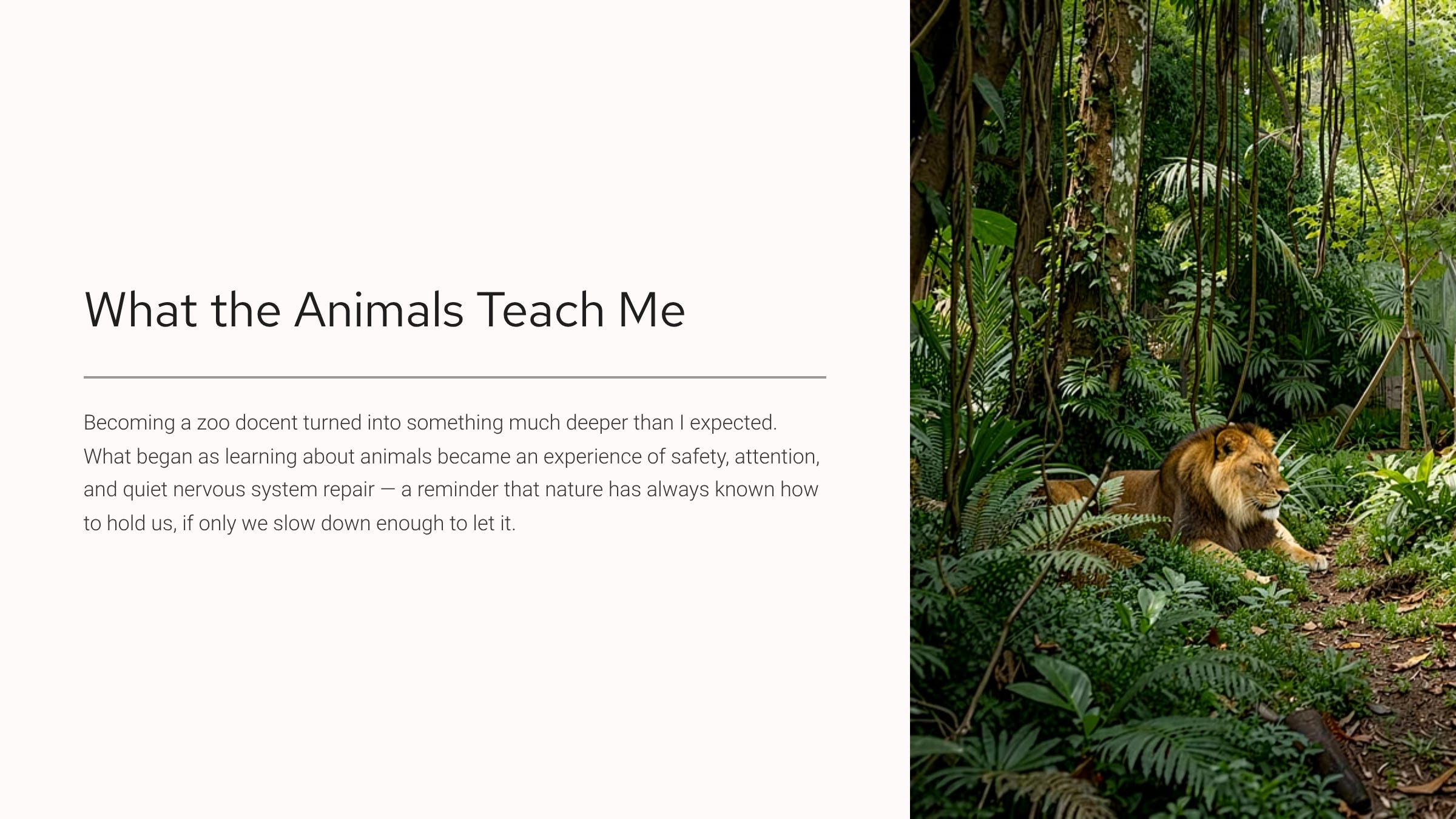
I thought I was signing up to volunteer at the zoo.
Something meaningful, something different, something that would get me out of my head and into the world in a new way.
What I didn’t expect was that it would feel like enrolling in a PhD program.
Six months. Over 160 animals. Birds, insects, ecosystems, plants. Taxonomy, habitats, behaviors, conservation status. I’ve had to learn more than I imagined possible, and I say that half joking, half completely serious. It’s immersive. It’s detailed. It requires attention in a way my previous life never did.
And maybe that’s the point.
Because attention is something most of us have lost.
The Nervous System Responds to What You Pay Attention To
Before this, my attention was fragmented.
Like most people, I lived in a world of constant input. Notifications, conversations, content, ideas moving quickly from one thing to the next. Even when I was “resting,” I wasn’t really resting. My attention was still scanning, still moving, still engaged in something.
At the zoo, that doesn’t work.
You cannot rush observation.
You cannot multitask your way through watching an animal.
You have to slow down.
And when you slow down enough, something else starts to happen.
Your nervous system follows.

Judy
There’s an orangutan at the zoo named Judy.
She’s a Bornean orangutan, which means she belongs to a species that is critically endangered. Their habitat is the tropical and subtropical forests of Borneo. They are arboreal, meaning they live in the trees, and diurnal, meaning they are active during the day. They are incredibly intelligent, part of the primate order, and the males develop large cheek pads as they mature—one of the most striking examples of sexual dimorphism in the animal world.
I didn’t know any of that before.
Now I do.
But what matters more to me is this:
Judy watches.
Not casually. Not in passing.
She observes.
And I find myself wondering, every time I’m there, if she recognizes me.
I go to see her at least three times a week. I stand in the same place. I slow down. I wait. And there are moments—quiet, subtle moments—where it feels like something passes between us.
Not in a mystical way.
In a present way.
In a we are both here kind of way.
And that kind of presence is rare.
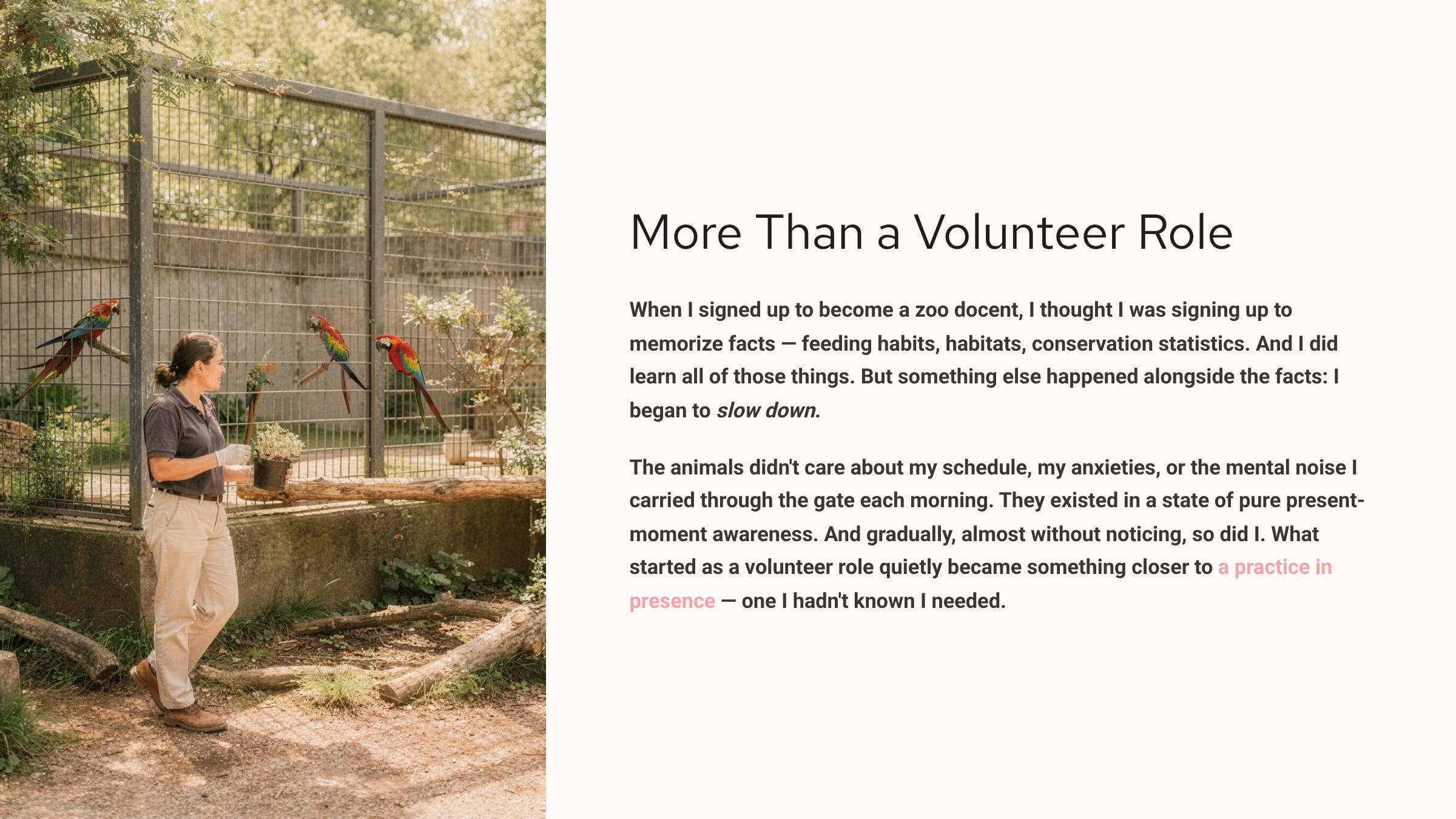
Animals Don’t Rush Regulation
One of the things I’ve been most struck by is how animals move through the world.
They are efficient, but not frantic.
Take the anteater.
It flicks its tongue with incredible speed, collecting ants from a nest, but it doesn’t destroy the nest. It doesn’t take everything. It moves on, allowing the colony to regenerate.
There is restraint built into the system. There is balance. It doesn’t overconsume.
It doesn’t override. It doesn’t behave like something that is disconnected from its own survival. It is, quite literally, not an addict.
And when you watch that long enough, you start to notice something uncomfortable.
How far we’ve drifted from that kind of rhythm.
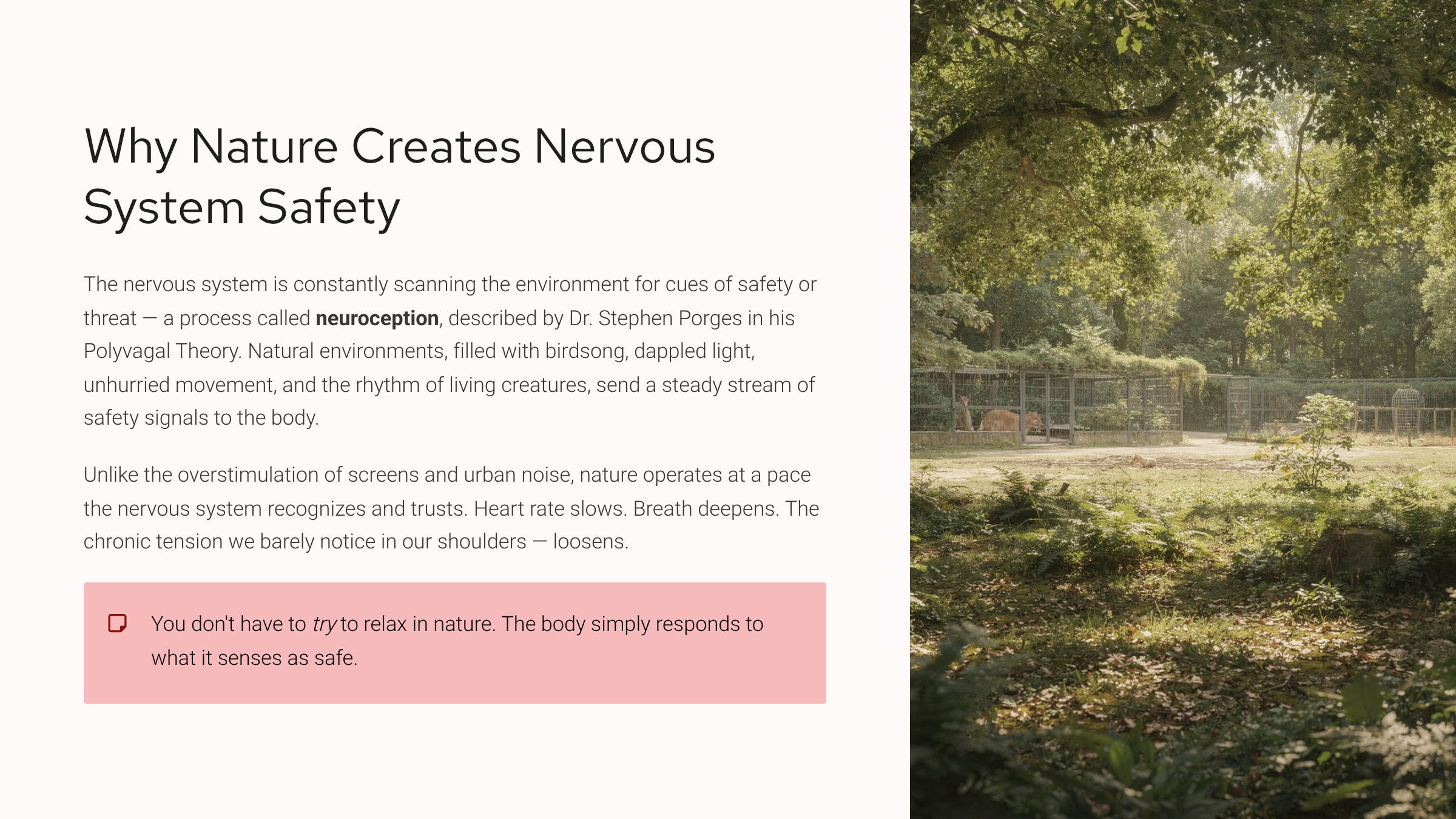
Safety Feels Different Than Stimulation
Being at the zoo has brought me something I didn’t expect.
Safety.
Not the loud kind. Not the kind that announces itself.
A quieter kind.
A grounded, steady feeling that comes from being in an environment where nothing is rushing you, nothing is demanding immediate output, and nothing is asking you to be anything other than present.
After everything my nervous system has been through, that matters.
It’s not just enjoyable. It’s regulating.
Nurture Is Not Optional
Last week, I was teaching a student, and we were working through the RAIN practice.
If you’re familiar, the “N” stands for nurture.
And she paused.
She said, “I forgot what that even means.”
Not in a dramatic way.
In a very honest way.
And I thought, of course you did.
Because most of us are not living in environments that model nurture.
We are living in environments that prioritize output, efficiency, and speed.
Nurture doesn’t get reinforced.
It gets overlooked.
But here’s what I’m seeing, both at the zoo and in my work.
Nurture changes the nervous system.
When I am at the zoo, sharing information about these animals, talking about conservation, helping people understand the importance of connection to the natural world, I feel a sense of care moving through me.
Not forced. Not performative. Real.
And when I’m teaching, guiding people through practices of rest and resilience, I feel the same thing. It’s the same energy. Different environment. Same nervous system response.
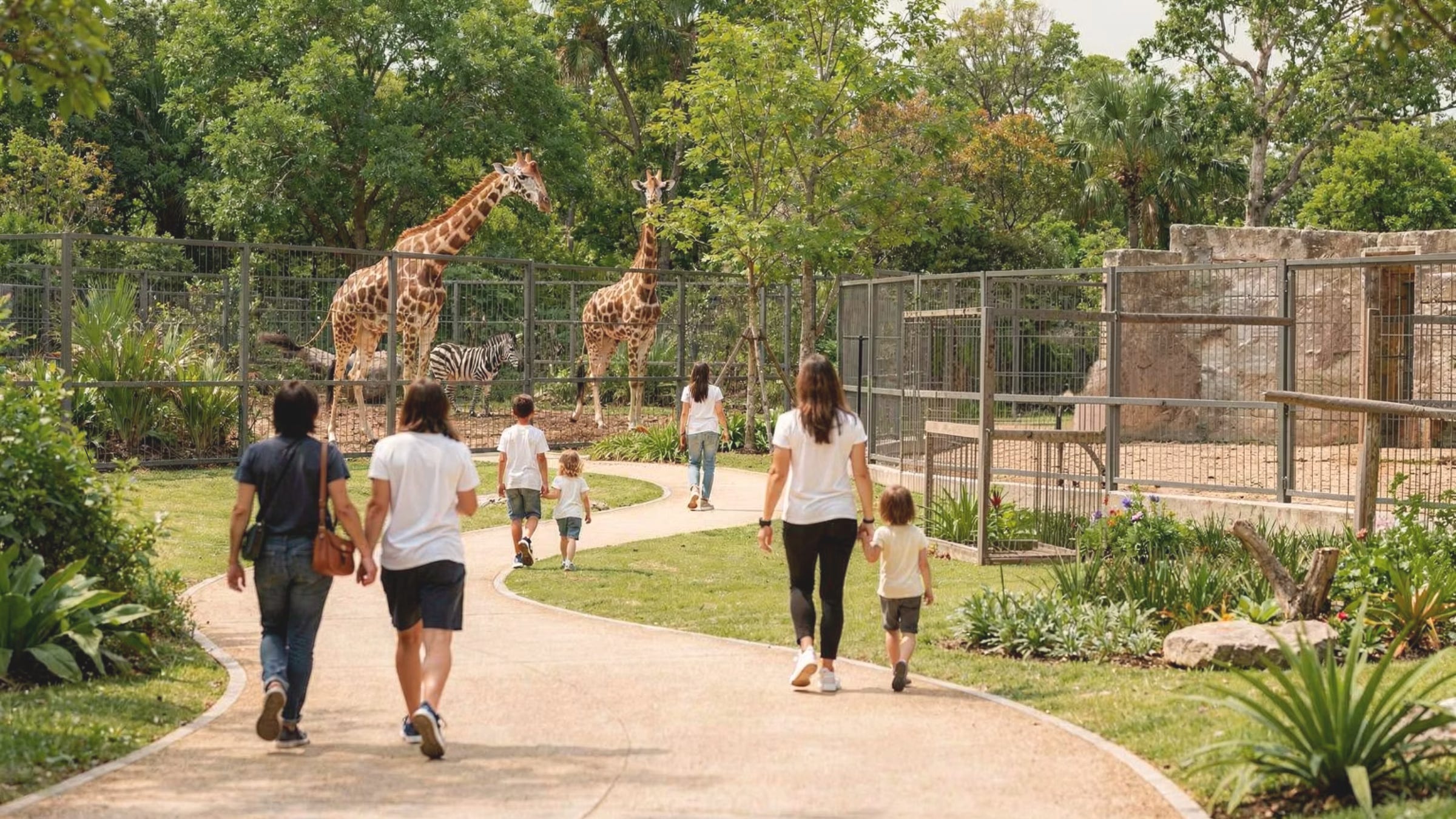
Slowing Down Is Not a Luxury
We talk about slowing down as if it’s optional.
As if it’s something you do when everything else is handled.
But what I’m learning—what I’m living—is that slowing down is the entry point.
It’s how you begin to notice what’s actually happening inside you.
It’s how you reconnect to your environment.
It’s how you start to feel again in a way that isn’t overwhelming.
The animals don’t need to learn this.
They already know.
We’re the ones who forgot.
I’m going to keep sharing what I’m learning here.
About the animals. About the nervous system. About what happens when you step out of urgency and into observation. Because I think we need it. More than we realize.
So here’s something to sit with:
When was the last time you slowed down long enough to actually observe something—without trying to fix it, capture it, or move past it?
And what might change if you did that more often?
Thanks for being here and slowing down with me for a few minutes.
In a world that keeps accelerating, learning how to regulate our nervous systems may be one of the most important skills we develop.
If you’re practicing that too — you’re in the right place.
Agree completely that to be with animals is slow down and regulate 💕 This is exactly what I feel when I am with my horses. They are fully present and pull me into that energy. I can spend an hour with them and it seems like a few minutes. And I leave feeling renewed in a way that modern life could never make me feel.