

Can someone use a psychedelic medicine and still identify as sober?
I wasn’t planning to write about Rich Roll .
In fact, I wasn’t planning to write about psychedelics at all.
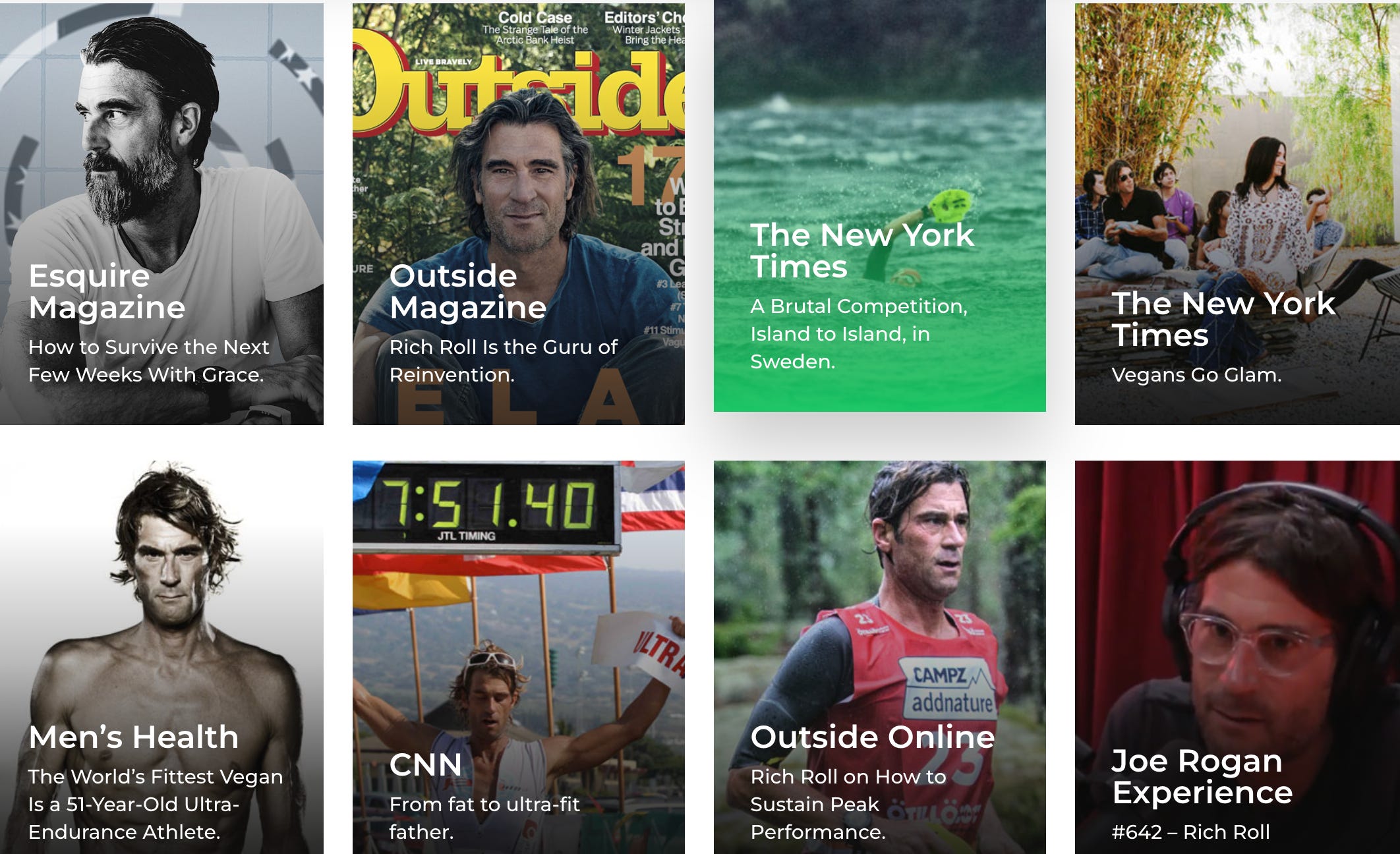
But then I listened to Rich sit down with his wife, Julie, and talk openly about his recent iboga experience. He has also spoken candidly on the Dopey podcast about participating in professionally guided sessions involving psilocybin and MDMA. He wasn’t speaking like someone chasing an altered state. He was speaking like someone who had spent decades searching for peace and had reached another crossroads.
It made me stop. Not because I had an opinion. But because I am familiar with this experience, and because I had a deeper question.
I’ve known Rich for a very long time.
We both got sober in Los Angeles, and our paths crossed at the Log Cabin back in the late ’90s. I still remember the first time I saw him walk through the door. He wasn’t the Rich Roll the world knows today. There wasn’t a bestselling book. There wasn’t one of the biggest podcasts in health and wellness. There wasn’t an ultramarathon legend standing there.
He was just another alcoholic trying to stay alive.
He looked exhausted. He was sweating. He looked like so many of us looked in those early days. Broken yet hopeful and terrified. That’s how it always begins.
Over the years I’ve watched his life unfold from a distance. Every now and then we’d cross paths, and every time I found myself genuinely so happy for him. I’ve admired what he has built, but even more than that, I’ve admired his honesty.
One thing Rich has never done is pretend that sobriety solved everything.
He has spoken openly for years about depression, about never quite feeling like he was enough, about perfectionism, achievement, and the persistent feeling that there was still something unresolved beneath all the outward success. Recently, describing what led him to iboga, he talked about “the patterns that survived all of it”—the recursive patterns that remained despite therapy, men’s work, intellectual understanding, and decades of recovery.
This has stayed with me. Because I know it. Not literally. But spiritually. I’ve been sober for almost thirty years, and there are patterns so deeply embedded that nothing short of a miracle can change them in me; I get where he has been.
Recovery gave me a life I never thought possible. It gave me integrity when I had none. It gave me friendships that have lasted decades. It gave me purpose. It gave me my son. It gave me work that I genuinely love. It gave me a relationship with something much bigger than myself.
Recovery saved my life.
Which is why this conversation feels so complicated. For a long time, the definition of sobriety felt relatively straightforward. Don’t drink. Don’t use drugs. Go to meetings. Help another alcoholic. Tell the truth. Live the principles. Repeat. Then the world changed.
Today we have emerging research on psychedelic-assisted psychotherapy for treatment-resistant depression, post-traumatic stress disorder, addiction, and end-of-life anxiety. We have clinicians, neuroscientists, and psychiatrists studying medicines that, for decades, were dismissed outright. At the same time, long-standing recovery communities continue to uphold traditions that have helped millions of people stay sober. Those two realities now exist side by side, and for many people they create genuine tension. It’s brutal to watch how some members of the recovery community are so stringent, live with outdated models, and are closed off to new scientific discoveries.
It’s also worth saying plainly: iboga is not a casual undertaking. It carries real cardiac risk, and people have died from it in unsupervised or underground settings. Whatever else this conversation is about, it isn’t an endorsement to go find it without serious medical screening first.
I’m not interested in arguing. I’m only interested in genuinely understanding. Because my own life has changed dramatically over the last eighteen months. When my nervous system collapsed, it forced me to rethink almost everything I thought I understood about healing. For years I believed healing meant becoming stronger. Now I think healing often means becoming more honest.
There is a difference.
My nervous system has taught me that the body carries stories the mind cannot always explain. It has taught me that symptoms are sometimes invitations instead of failures. It has taught me that curiosity can be far more useful than certainty.
That’s why I found myself listening to Rich with no judgment (ten years ago I would have been in radical judgment). Not because I suddenly have all the answers. But because I have fewer. And strangely, that feels healthier. Recovery communities have always wrestled with difficult questions. Can someone take pain medication after surgery and still be sober? What about antidepressants? Ketamine administered in a medical setting? What about MDMA-assisted psychotherapy? What about iboga?
These aren’t hypothetical questions anymore. They’re here. And they deserve more than slogans.
What struck me most listening to Rich wasn’t that he had taken iboga.
It was that after all these years he was still willing to say, “I don’t have this figured out.”
That takes courage. I LOVE HIM more for this. Especially when millions of people have built an image of who you are, and you step outside of that narrative.
Maybe that’s the conversation we’re actually being invited into.
Not whether Rich Roll is sober, or whether one is sober who is medically seeking assistance, or trying to dig their way out of an emotional and spiritual black hole.
Because that’s between Rich (or the person seeking), his conscience, the people he trusts, and whatever higher power guides his (their) life.
The conversation is whether recovery itself is mature enough to ask new questions without abandoning the principles that have saved so many of us.
Can we remain deeply committed to sobriety while also remaining intellectually honest about emerging science? Can we be curious without becoming reckless? Can we honor tradition without refusing to learn?
I don’t know. And I’m surprisingly comfortable saying that.
Because after almost thirty years of recovery—and after the most difficult year of my life—I have become less interested in certainty and much more interested in healing.
Perhaps that’s what recovery has always been asking of us. Not to know everything. But to stay teachable.
So I’ll leave you with the question I’ve been carrying since I finished Rich’s conversation.
If the purpose of recovery has always been freedom—not simply abstinence, but freedom—how do we continue honoring the principles that saved our lives while remaining open to new ways of healing that science is only beginning to understand?
I don’t think there’s an easy answer. But I do think it’s a conversation worth having.
Thanks for reading.
If you’re ready to understand your nervous system a little better, explore The Capacity Report at lanekennedy.com/capacity. And if you’re looking for a more intentional, alcohol-free way to experience a city, I’ll meet you at soberinsanfrancisco.com.
Did you know I wrote this book?
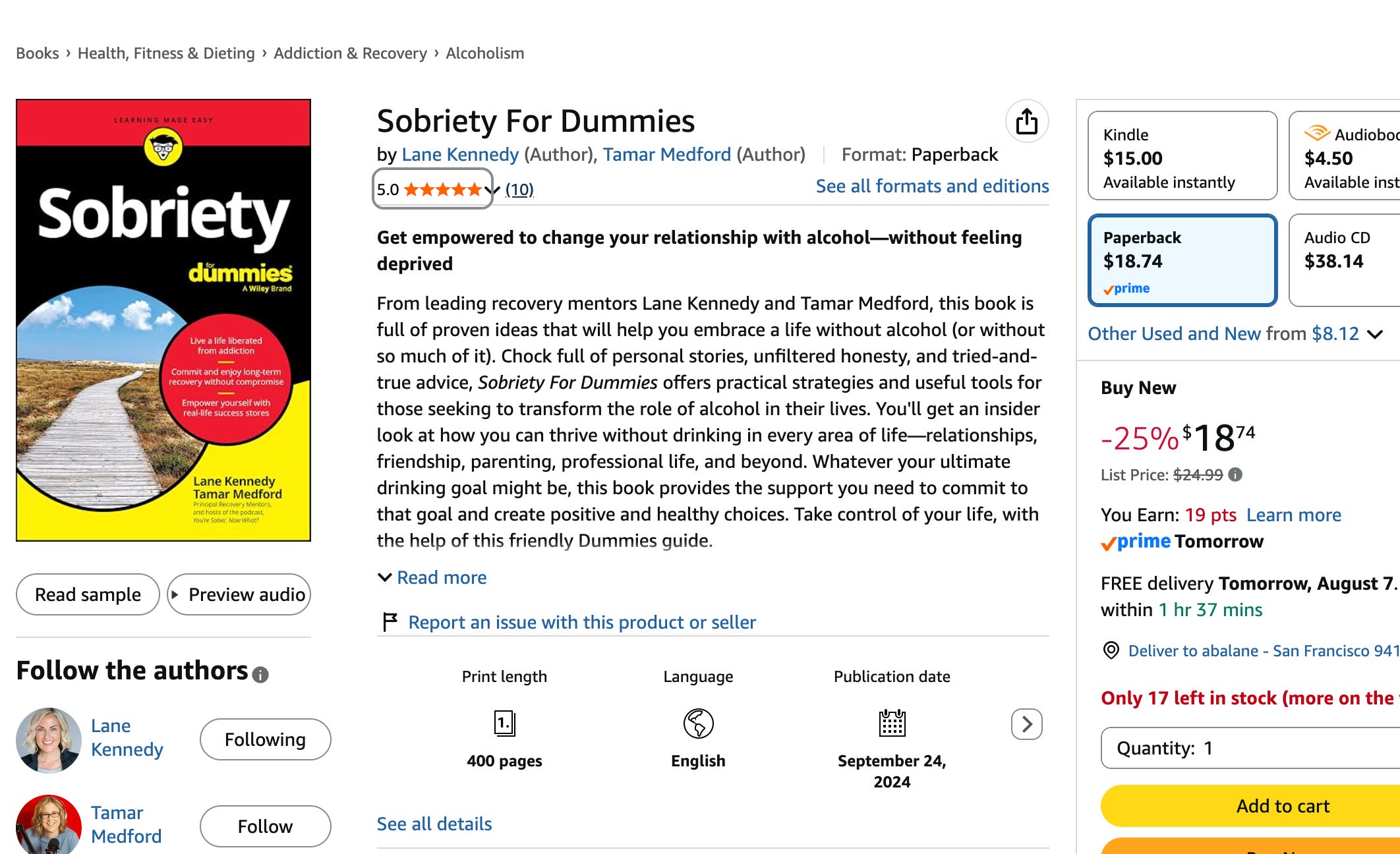
It opens the door to many options in recovery. Check it out.