

On Monday morning, Alysse Bryson, Editor-in-Chief of The Sober Curator, texted me a New York Times article. She has a habit of doing that. Every so often she’ll send me something she knows I’ll get stuck on. Not because she expects me to agree with it, but because she knows I tend to sit with ideas. I don’t usually react right away. I read them once, then I carry them around with me until I understand why they landed in the first place.

This was one of those articles. It explored what happens when Americans drink less, focusing on Louisville, Kentucky, where bourbon is woven into the city’s economy, history, and identity. It was a thoughtful piece. The reporter examined layoffs at Brown-Forman, the financial strain facing restaurants that have long relied on alcohol sales, the uncertainty surrounding neighborhood wine shops, and the concern that museums, orchestras, and other cultural institutions could lose an important source of philanthropic support if the spirits industry continues to contract. I finished reading it, closed my laptop, and thought, Interesting. Then I packed my suitcase.
The numbers behind that reporting are real, and they deserve to be named rather than gestured at. Brown-Forman cut 12% of its workforce and closed a Louisville cooperage that had run for eighty years. In Los Angeles, Angel City Brewery closed this spring after more than a decade, and its regulars mourned it the way people mourn an actual place — not an abstraction. Teddy Abrams, who conducts the Louisville Orchestra, said the assumption had always been that Brown-Forman’s giving would simply always be there. I don’t think any of that is small. Coopers and master distillers don’t retrain into wellness jobs by next Tuesday, and a city’s cultural institutions losing a funding source is a real institutional problem, not an abstraction I can wave off with a better industry to point to instead.
That afternoon I flew to Ashland, Oregon, where every few months I spend a week resetting my nervous system. Eighteen months ago, I never would have imagined scheduling my calendar around recovery. I scheduled around conferences, speaking engagements, clients, deadlines, and flights. Recovery was something I assumed would happen somewhere in the margins if I worked hard enough. Nervous system collapse has a way of correcting that illusion. Now these trips have become part of my healthcare. I go because my body needs them. I go because slowing down is no longer optional; it is part of how I stay well.

Ashland asks very little of me, and that’s one of the reasons I love it. I drink my tea slowly. I watch the baby deer wander through the neighborhood in the early morning. I sit on a bench and notice the wind moving through the trees or the blades of grass bending in different directions. Most days I don’t accomplish anything measurable, and that is precisely the point. My nervous system has spent enough years believing it always needed to produce, perform, achieve, or fix something. In Ashland, I practice something much more difficult. I practice allowing the day to unfold without asking it to become productive.
What surprised as I sat and watched the day pass was that I couldn’t stop thinking about the article.
It stayed with me while I watched the deer grazing in the evening and while I sat quietly with a book I wasn’t really reading because my mind kept returning to Louisville. There was a low-grade irritation sitting in my belly that I couldn’t quite explain. It wasn’t that I disagreed with the reporting. In fact, I thought it was balanced, well researched, and entirely fair. The irritation came from somewhere else. I had the distinct feeling that we were asking an important question, but perhaps not the most important one.
“Do you want me to write something about it?” I texted AB.
Her answer came back almost immediately. “Yes”
The article asks what happens when people stop drinking. It measures the economic consequences of declining alcohol sales and thoughtfully explores the communities that may be affected. Those are important questions, and they deserve serious reporting.
But I found myself wondering if we were measuring the wrong economy.
What if the more revealing question isn’t what people are giving up?
What if the more revealing question is what they are choosing instead?
As the week went on, I stopped thinking about Louisville and started thinking about San Francisco. More specifically, I started thinking about the last several years and how dramatically the culture around me has changed. Not overnight. Not because one report came out or one Surgeon General issued a warning. It has been quieter than that. It has happened one decision at a time, one conversation at a time, one person choosing something different without making a grand announcement.
Gallup’s most recent survey found that only 54% of American adults now drink at all — the lowest number they’ve recorded in the ninety years they’ve been asking the question. That’s not a niche behavior anymore. That’s most of the country, quietly, one decision at a time.
When I first got sober nearly three decades ago, not drinking often required an explanation. People assumed you were pregnant, on medication, or had a drinking problem. Saying no to a glass of wine usually invited another question. Today, I rarely see that happen. Restaurants have pages devoted to zero-proof cocktails. Hotels proudly feature alcohol-free options. Coffee shops are full before seven in the morning. Running clubs have become social clubs. Saturday mornings look different than they did when I first got sober, and I don’t think that’s accidental.
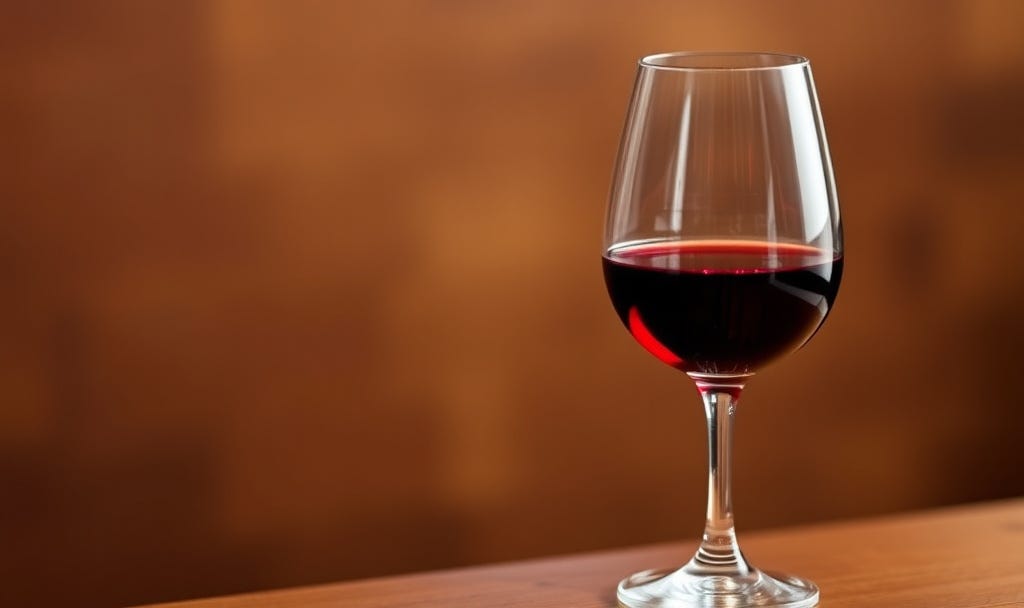
A glass of wine where I live can easily cost fourteen dollars.
Fourteen dollars.
That number stayed with me during my week in Ashland because fourteen dollars buys a lot of other things. It buys a beautiful bag of peaches at the farmers market. It buys admission to a museum, a journal you’ll keep for years, or a handful of fresh flowers that will sit on your kitchen table all week. It pays for coffee and a croissant with a friend. It buys a ferry ride across the bay or helps pay for a monthly gym membership. Fourteen dollars isn’t really about fourteen dollars. It’s about choice. Every dollar we spend tells a story about what we value, and increasingly I think people are telling a different story than they were twenty years ago.
The article I read focused, understandably, on what happens when those fourteen dollars are no longer spent at the bar. Restaurants feel it. Wine shops feel it. Distilleries feel it. Cities built around alcohol tourism feel it. Those consequences deserve our attention because they affect real people trying to make a living.
But money rarely disappears. It moves.
Economists have understood this for generations. Consumer spending shifts as culture shifts. When one industry contracts, another often grows in response. Looking at the numbers, I couldn’t help wondering if that is exactly what we’re witnessing. The global wellness economy is now valued in the trillions of dollars. Specialty coffee continues to grow. Boutique fitness has become its own industry. Outdoor recreation contributes hundreds of billions of dollars to the American economy each year. Wellness tourism is expanding rapidly as more people choose to spend their vacations hiking, cycling, walking ancient pilgrimage routes, learning to surf, or simply finding places where they can rest.
Wellness tourism alone is projected to grow from roughly $525 billion to more than $900 billion globally by the end of the decade. That’s not a subculture. That’s where a meaningful share of the fourteen dollars is actually landing.
I don’t think these trends are unrelated.
The same person who once spent Saturday afternoon at a winery may now be spending it on a trail. The couple who celebrated every anniversary with an expensive bottle of Cabernet may now book a cooking class instead. Someone who once planned vacations around breweries now plans them around national parks. A woman I know recently laughed as she told me that she had traded wine club memberships for airline tickets. “I realized,” she said, “I’d rather remember the trip than recover from it.”

There is another shift happening that few people could have predicted even five years ago. Physicians and researchers are now studying the effects of GLP-1 medications on alcohol consumption after thousands of patients reported that their desire to drink had diminished dramatically. These medications were developed to improve metabolic health, not to change drinking behavior, yet they appear to be influencing the brain’s reward pathways in ways scientists are only beginning to understand. Whether those findings ultimately reshape addiction medicine remains to be seen, but they have already captured the attention of investors and the alcohol industry because they represent something much larger than a pharmaceutical trend. They represent another way in which people’s relationship with alcohol is changing.
One study following more than 14,000 GLP-1 users found that 45% of those who used to drink weekly reported drinking less after starting the medication. Diageo has already reported double-digit declines in some of its biggest tequila brands, and at least one investment fund has walked away from its Diageo holdings entirely, citing GLP-1s by name as the reason.
At the same time, conversations about longevity have moved out of research laboratories and into everyday life. People are no longer asking only how long they will live. Increasingly, they are asking how well they want to live. Healthspan has entered the public vocabulary. Sleep has become aspirational. Strength training has become something people begin in their fifties and sixties instead of something they leave behind in college. Blood sugar, inflammation, recovery, and cognitive health have become dinner-table conversations in a way they simply were not a decade ago.
I don’t believe these are isolated trends. I think they are connected.
When a culture begins to value feeling well tomorrow as much as feeling good tonight, consumer behavior changes. Businesses change. Entire industries change. We often describe these shifts in economic terms, but underneath every market is a human decision. Millions of individual people wake up one morning and decide they want something different. Eventually those individual decisions become a cultural movement, and the economy quietly reorganizes itself around those new values.
That, more than declining bourbon sales, is the story I think we’re living through.

Toward the end of my trip, I realized this article had never really been about bourbon, Louisville, or even alcohol. Those were simply the entry points into a much larger conversation. What stayed with me wasn’t the economic data or the changing consumer habits. It was the realization that millions of people are quietly redefining what they want their lives to feel like.
For generations, we’ve been taught to invest in retirement accounts, real estate, careers, education, and businesses. We understand that small, consistent investments compound over time. Yet very few of us have been taught to invest in the one system that allows us to enjoy any of it: our nervous system.
Perhaps that’s what I’ve been witnessing over the past year. People aren’t simply giving something up. They’re investing somewhere else.
They’re investing in sleep instead of another drink. They’re investing in Saturday morning hikes instead of Saturday morning hangovers. They’re investing in meaningful travel, stronger relationships, better metabolic health, and experiences they will actually remember. Whether they realize it or not, they’re making deposits into something I have come to think of as nervous system capacity.
After my own nervous system collapsed, I stopped asking myself, “Can I get through today?” I began asking a much better question: “What decision today will help me feel more alive tomorrow?” That single question changed how I think about work, relationships, travel, recovery, food, movement, and yes, even my fun, tragic, bad habits (like popcorn and M&Ms)! It shifted my attention away from short-term gratification and toward long-term capacity.
Maybe that’s the conversation we should be having. Not whether an industry is shrinking. Not whether another industry is growing. But whether we are building lives that our bodies can actually sustain.
As our culture continues to evolve, I suspect we’ll keep finding new ways to gather, celebrate, connect, and create community. Human beings have always needed one another. Alcohol never owned that need. It simply occupied that space for a very long time. What we’re watching now isn’t the disappearance of connection. It’s the beginning of a different expression of it.
So I’ll leave you with the question that stayed with me throughout my week in Ashland:
If your calendar, your credit card statement, and your body all told the same story, what would they say you’re investing in?
If this question resonates with you, I’d love to invite you a little deeper into my work.
For nearly three decades, I’ve studied the intersection of stress, recovery, genetics, meditation, and nervous system regulation. One of the ways I bring those worlds together is through The Capacity Report, a personalized assessment that combines your DNA with an in-depth lifestyle questionnaire to help you better understand how your biology responds to stress and where you can begin building greater resilience. It isn’t another generic wellness quiz. It’s a practical roadmap designed around you.
You can learn more about The Capacity Report at https://lanekennedy.com/capacity.
And if this essay has you reconsidering your relationship with alcohol—or simply the way you want to experience the world—I hope you’ll also visit Sober in San Francisco. I created it because I believe travel can be more than checking places off a list. It can become a practice of paying attention, slowing down, and discovering what we often miss when we’re rushing through life.
You can explore that work at https://soberinsanfrancisco.com
.Thank you for spending a little time with me today. I don’t take your attention lightly, and I hope this essay gave you something worth carrying into tomorrow.
Article originally posted on SC.