

In the first two pieces of this series, I examined how high-control wellness communities often respond to dissent—first by shaping the narrative, then by enforcing loyalty through rules, expulsion, and the illusion of choice.
This final piece looks at the last move.
The softest one.
And often the most effective.
Because when authority feels exposed, it rarely tightens its grip. It softens its tone.
The screenshots below come from the final sections of the same mass email about me. They are shared for behavioral analysis only. Names are omitted.
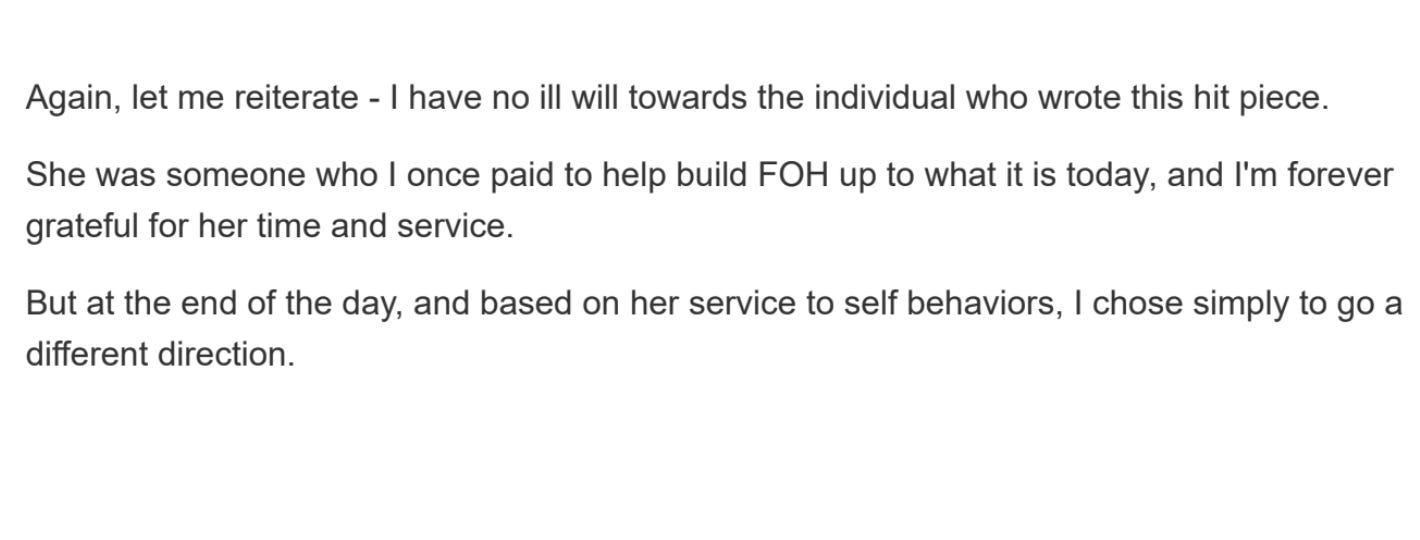
Public Forgiveness as a Power Move
At first glance, this language appears conciliatory. Gracious, even. His attempt to be sincere is almost laughable. He calls my work a, “hit piece"!
But cult researchers have long noted that public forgiveness functions differently from private repair.
In Cults Inside Out, Rick Ross describes this as benevolent reframing: after criticism or exposure, leaders reassert moral superiority not by engaging the issue, but by performing magnanimity.
Forgiveness is offered — but only after the narrative has been fixed.
Gratitude is expressed — but only after authority has been reestablished.
The dissenter is framed as flawed, but worthy of mercy.
This is not reconciliation. It is reputation management.
As sociologist Alexandra Stein notes, benevolence at this stage serves a stabilizing function: it reassures followers that the leader is calm, compassionate, and in control — even as the original concerns remain unaddressed.
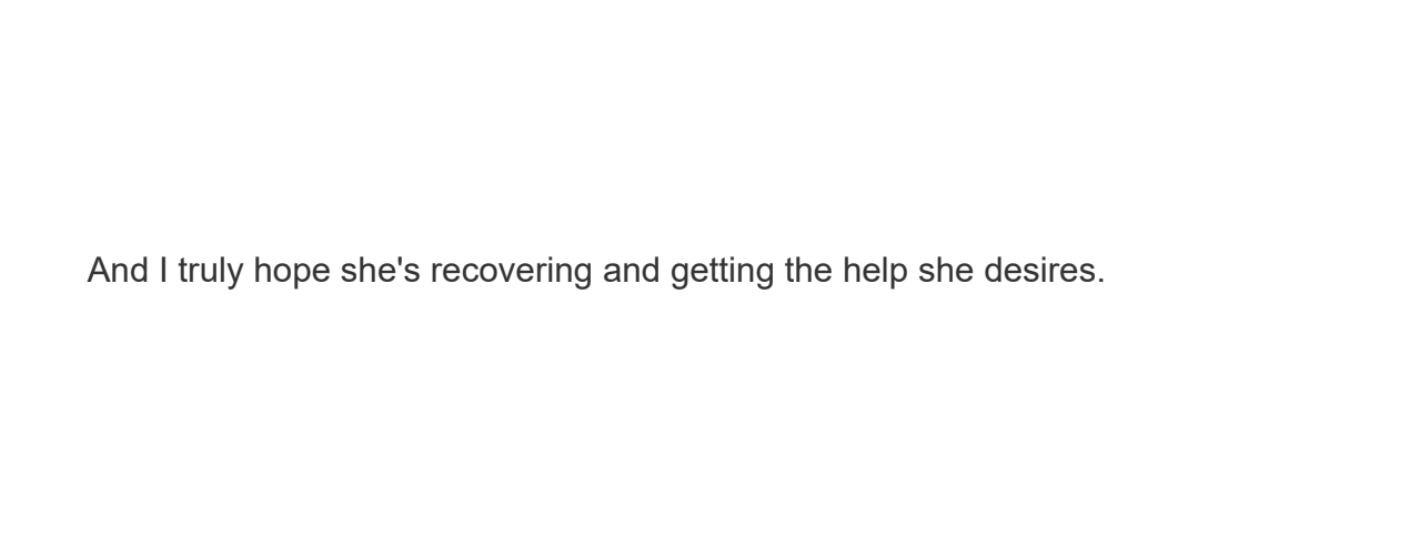
Concern That Closes the Case
This is where wellness language does its most subtle work.
Expressions of concern appear empathetic. But in high-control environments, they often serve a different purpose: they end the conversation!
Psychologist and cult expert Dr. Janja Lalich describes this move as benevolent dismissal. Once concern is publicly expressed, further inquiry becomes unnecessary — even inappropriate.
After all, what kind of person questions someone who is “just worried” about another’s health? (This is where he actually made me laugh.)

The Final Sort
Every high-control system eventually arrives here.
After:
public dismissal
moral clarification
benevolent concern
comes the sorting mechanism.
Readers are invited to evaluate themselves. Over 60K humans had to take a moment and reflect, do I belong, do I agree, am I in alignment with X?
If the message resonates, they belong.
If it doesn’t, they should leave.
Cult researchers consistently identify this as a loyalty reset — a moment where uncertainty is resolved not through discussion, but through alignment.
Amanda Montell, in Cultish, describes how this language converts discomfort into self-selection. The system no longer needs to eject people. They eject themselves — believing it was their choice.
This is how control modernizes.
No force.
No demand.
Just an invitation that quietly defines who is worthy of staying.
For me, the most revealing moment wasn’t the criticism or the rules or even the expulsion. It was the speed with which he moved to stabilize himself — benevolently, publicly, and without ever engaging the substance of what was raised.
I didn’t plan to examine any of this in public. That decision was made for me, and at scale. In a strange way, that clarity was a gift. When these patterns are broadcast widely, they no longer need interpretation.
They explain themselves.