

Quick Note
This essay begins a short series examining how power, authority, and loyalty are shaped inside certain wellness and self-improvement communities.
I’m writing it not as a commentator from the outside, but as someone this language has been used on—publicly, and at scale. This email was sent to the writer's community.
What follows is not a defense of myself, nor an attempt to settle a personal conflict. It’s an examination of patterns: how dissent is reframed, how authority is protected, and how concern, spirituality, or “help” can be used to silence rather than support.
The screenshots included are shared for educational analysis. Names and identifying details are intentionally omitted. The goal is awareness, not accusation.

I did not intend to write about cult dynamics.
I was doing what many people do when they leave a wellness space that no longer feels aligned: I stepped away quietly, processed privately, and began writing about patterns I was seeing more clearly from the outside, as I walked my healing journey.
Then a mass email was sent to tens of thousands of people about me.
Not to me.
About me.
What follows is not a response to that email. It is an analysis of it—because the language used in moments like this matters far beyond one individual or one group. It shows up repeatedly in high-control wellness communities, spiritual movements, and personality-driven brands.
The screenshots below come from that email. I am sharing them for educational analysis, with names omitted. The goal is awareness—not retaliation.
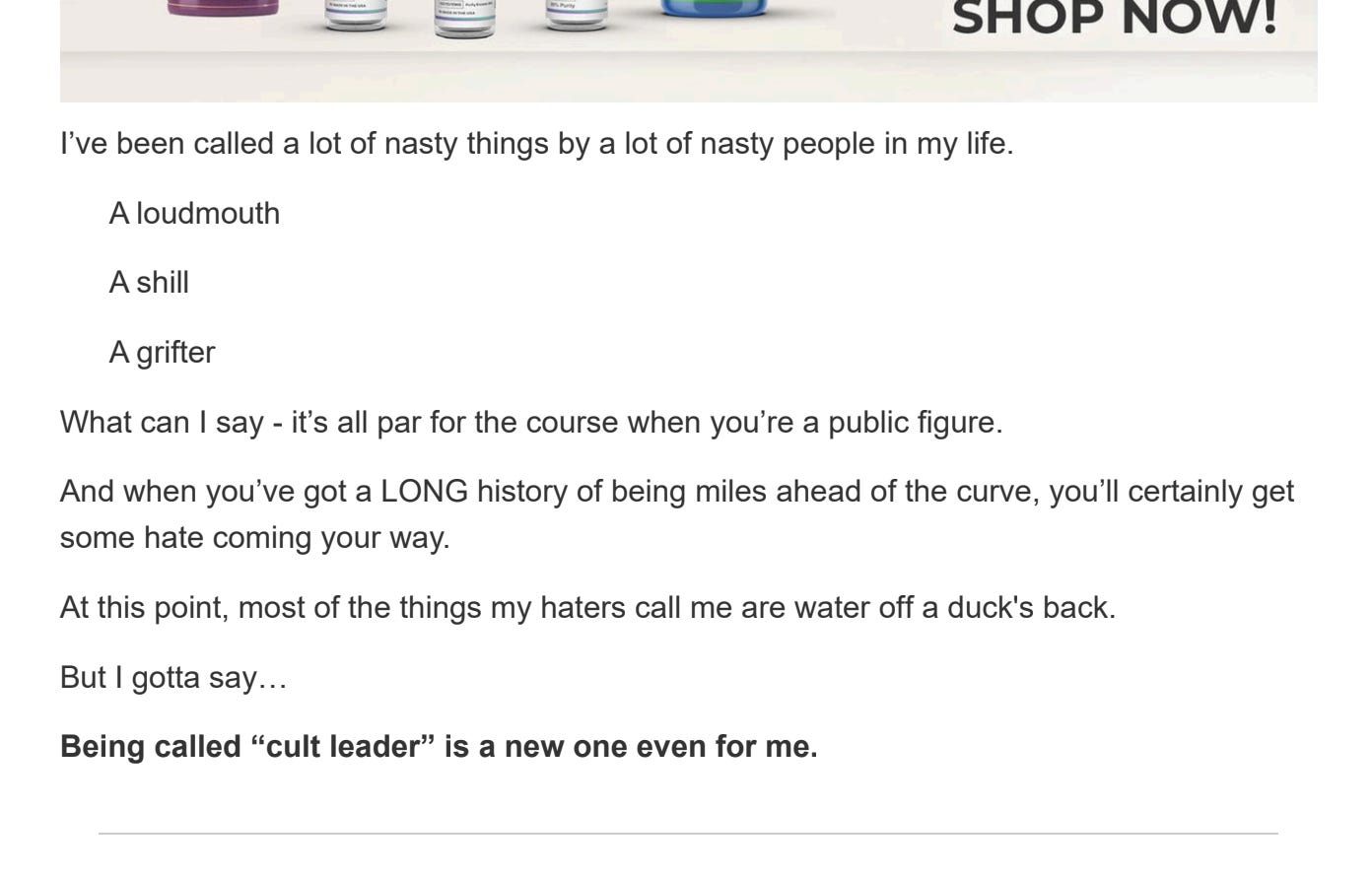
The Persecution Opening
The email begins with a familiar move: preemptive victimhood.
Before any context is offered, before any specific behavior is addressed, the reader is guided into an emotional position—one in which the sender is framed as embattled, misunderstood, and unfairly targeted.
Steven Hassan, a former cult member and one of the most widely cited researchers on coercive control, describes this as a form of emotional priming. In Combating Cult Mind Control, he notes that when leaders frame criticism as persecution, they collapse into a black-and-white view. The audience is subtly instructed to experience loyalty, not curiosity.
Amanda Montell, Podcast host and author of Cultish, points out that this tactic is particularly effective in wellness and self-improvement spaces, where identity and belonging are already central. The language doesn’t ask readers to evaluate claims—it asks them to take a side.
What’s notable here is not that criticism exists. Public figures are criticized all the time. What’s notable is how quickly the email establishes an “us versus them” frame—before any facts are presented.
The unspoken message is simple:
If you question what follows, you are part of the attack.
That is not transparency.
It is narrative control.
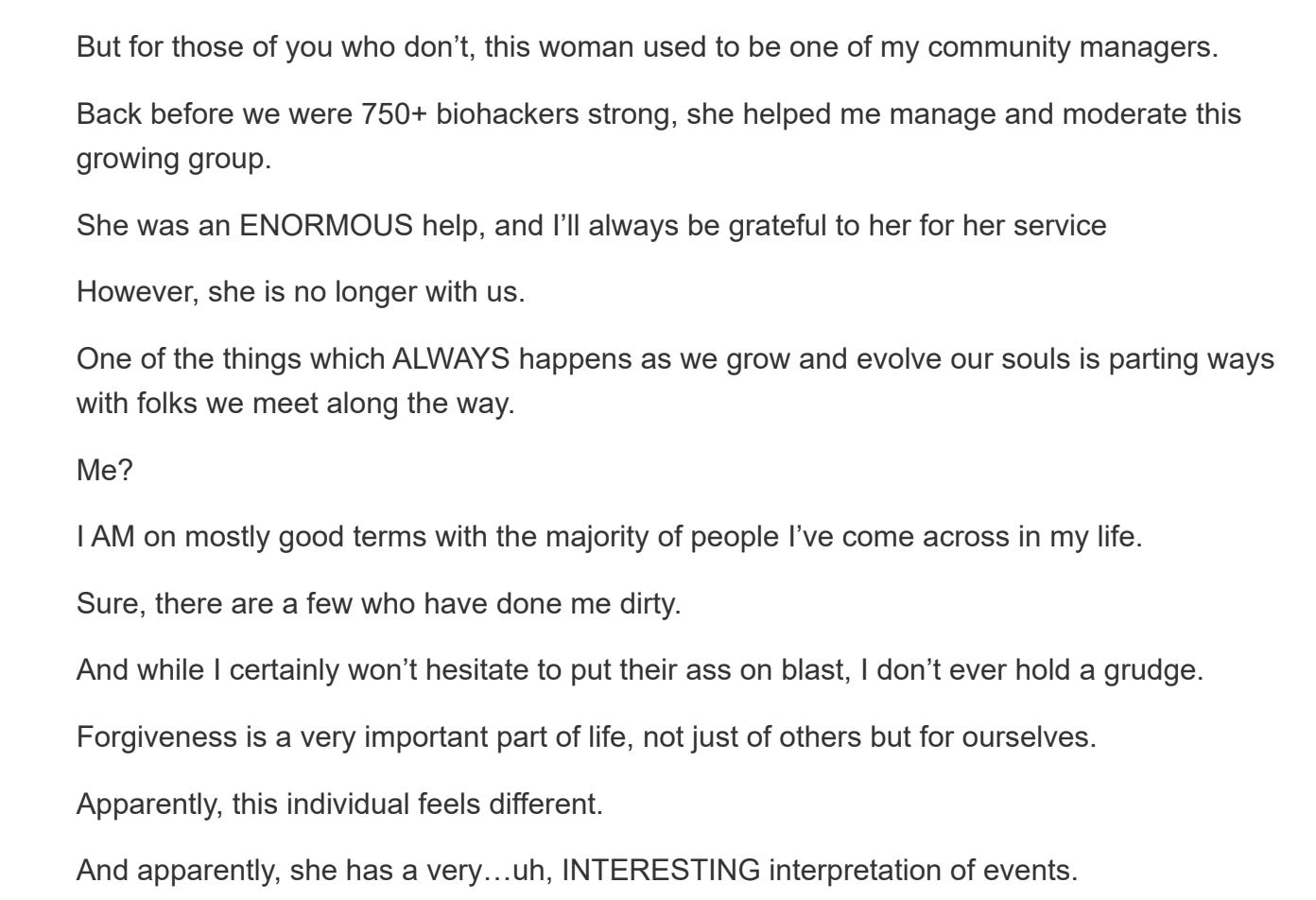
The Apostate Frame
Next comes a classic move identified across cult-recovery literature: the apostate narrative.
In Take Back Your Life, sociologist Alexandra Stein describes how high-control groups often reframe former insiders as cautionary tales. Praise is offered briefly—just enough to establish credibility—before separation is framed as inevitable, even spiritually ordained.
Language like “no longer with us” and references to “growing and evolving our souls” may sound benign, even compassionate. But functionally, it does something specific: it removes the former insider’s legitimacy while maintaining the leader’s moral authority.
Former members are not allowed complexity. They are reduced to symbols or dollars.
Podcasts like A Little Bit Culty and Cults to Consciousness document this pattern repeatedly: dissenters are not engaged with directly. They are described to the group, without the opportunity to speak for themselves.
Healthy communities can tolerate disagreement.
High-control systems require a story about why someone had to go.
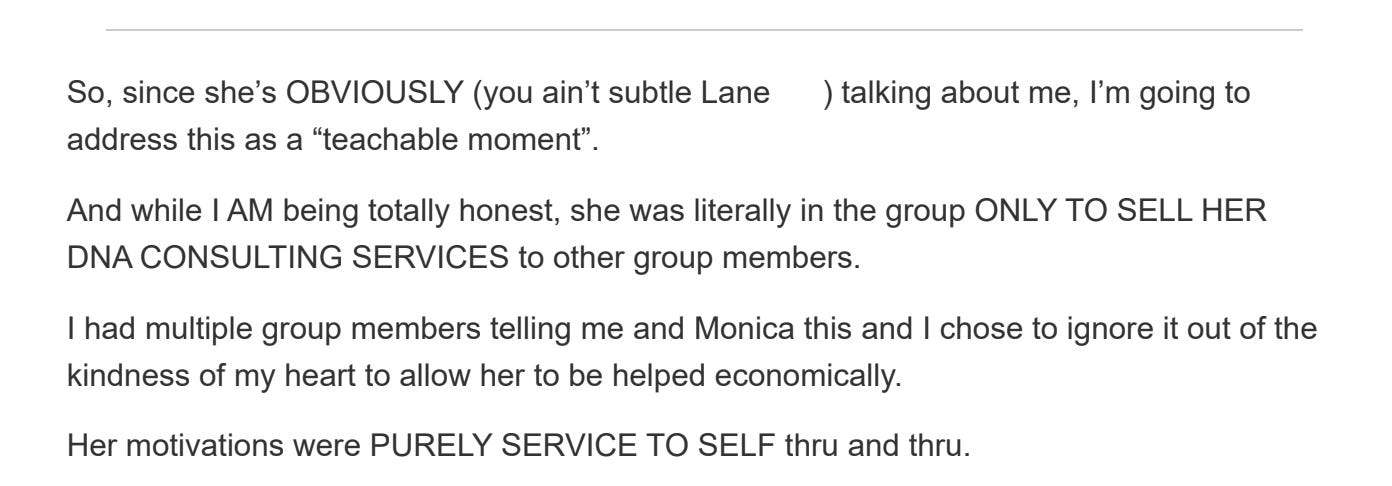
Public Diagnosis as Discrediting
At this point, the email shifts from framing to pathologizing.
Your motives are named. Your intentions are interpreted. Your character is assessed—publicly, unilaterally, and without your participation.
This is where wellness culture adds its own twist.
In many high-control spiritual or therapeutic environments, disagreement is not treated as disagreement. It is treated as evidence of pathology. Trauma language, spiritual language, even health language becomes a tool for dismissal.
Dr. Ramani Durvasula, a clinical psychologist who studies narcissistic systems, often notes that in these environments, concern is weaponized. “I’m worried about you” replaces “I disagree with you.” Diagnosis replaces dialogue.
The effect is subtle but powerful: the audience is guided to see dissent not as a legitimate perspective, but as a symptom.
And once someone is framed as unwell, unstable, or self-serving, their words no longer need to be addressed.
Why This Matters
None of this requires a group to be a cult in the legal or sensational sense to be harmful.
As journalist Jesselyn Cook has reported in her coverage of modern cult dynamics, today’s high-control groups often look like brands, memberships, or movements. There are no compounds. There are newsletters. There are Slack channels. There are “communities.”
What makes them dangerous is not intensity.
It is how power responds to being questioned.
This is Part I of a three-part series.
In Part II, I’ll examine how dissent in wellness spaces is often reframed as mental, emotional, or physical instability—and why many people feel confused or unwell long before they can name what’s happening.
Part III will look at the final move: how emotional arousal, moral sorting, and sales language converge—and why “If this isn’t for you, don’t join” is not as neutral as it sounds.
For now, it’s enough to notice this:
When language is used to close inquiry rather than invite it, your body often knows before your mind does.
And that knowing deserves to be taken seriously.
Yep. This cult leader does protest too much. A non cult leader has no need to attack anyone.