

For a long time, I thought my body was the problem. I lost my cycle when I was 26 years old, my hair started falling out, and my bones ached.
I tried harder. I followed all the advice. I listened closely to very expensive doctors, wellness experts, and people who spoke with confidence about what should work for me. And when it didn’t, I assumed the failure was mine, and it was depressing, the kind of depressing that you don't leave your house.
Eventually, I ran out of people to ask. I was on my own. Investigating and researching.
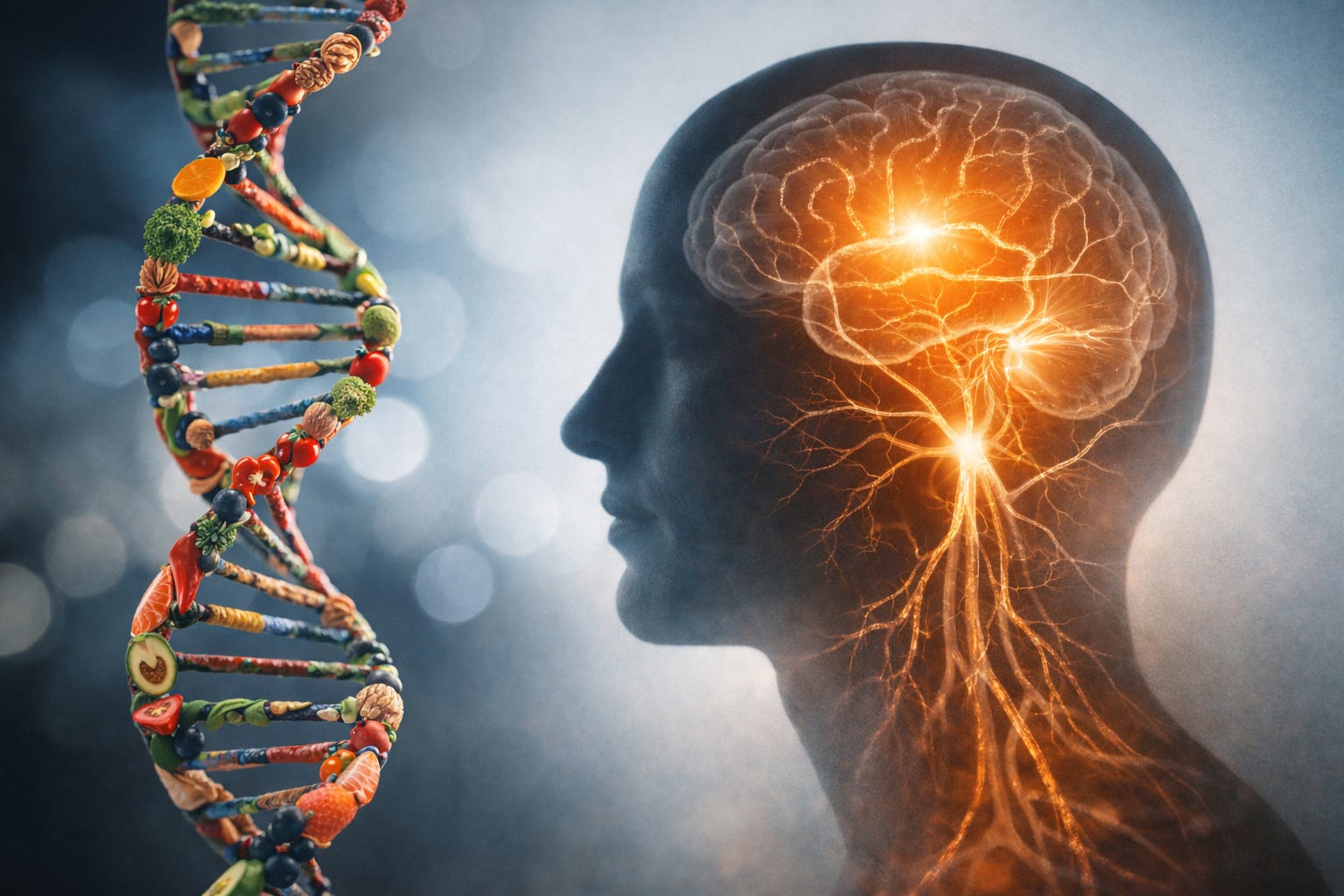
That’s part of what led me to the work I now do alongside my teaching: functional DNA analysis. Not because I wanted another answer, but because I needed context—something more precise than general advice and more honest than “just go home, rest, and keep going.”
Understanding my own DNA didn’t give me a magic fix. It gave me a map. One that made sense of my hyperfocus, my history with addiction, my intensity—qualities that had shaped my life long before I had language for them.
Generic Health Advice So Often Misses the Mark
Most health advice is built on averages. Are you average? I don't think so. Nervous systems don’t live in averages. They live in bodies shaped by genetics, environment, and experience.
Decades of research in behavioral genetics show that stress reactivity, emotional regulation, and even coping styles are partly heritable. Studies of the HPA axis—the system that governs our stress response—demonstrate significant genetic influence on how intensely we respond to stress and how quickly we recover.
To put this more simply: two people can do the exact same thing and have very different physiological outcomes.
This gets completely lost in wellness culture, and it's what drove me crazy in the wellness cult I left ten months ago. An overpowering voice and a clean protocol can feel satisfying for a moment, but that same clean protocol can dismantle someone's system if their DNA is a bit sluggish. What soothes one nervous system can overstimulate another. What regulates one person can quietly dysregulate someone else. Every person is unique.
DNA doesn’t explain everything—but it explains why advice and health strategies land differently.
When I began looking at my own genomics, patterns emerged that years of symptom-chasing hadn’t clarified.
Variants related to neurotransmitter metabolism helped explain why my nervous system could feel steady all day and unravel at night. Genes involved in my methylation and detox pathways shed light on why certain supplements helped briefly—but then made things worse. My histamine pathway offered insight into reactions that didn’t track neatly with food sensitivities alone.
Histamine, as research increasingly shows, is not just about allergies. It’s a neurotransmitter involved in wakefulness, stress signaling, and immune response. Elevated histamine activity has been linked to anxiety, sleep disruption, and heightened reactivity—especially under chronic stress. (Hello, are you paying attention here?)
This mattered because my reactions weren’t just biochemical. They were being shaped by timing, stress, and lived experience layered onto my biology.
Your Biology Carries History
There’s a growing body of evidence—from epigenetics to trauma research—showing that stress doesn’t stop with one generation. Adverse experiences can influence gene expression, shaping how systems respond to threat long after the original event has passed.
This doesn’t mean trauma is “coded” permanently into DNA. But it does mean that biology remembers. And when you combine inherited sensitivity with lived experience, certain nervous systems learn to stay alert.
Understanding this changed something fundamental in me. I no longer saw activation as a flaw or symptoms as something to fix with willpower. I stopped expecting myself to control responses that weren’t voluntary in the first place. My nervous system wasn’t broken. It was adaptive.
Regulation Is Personal
Nervous system regulation is often presented as a set of universal tools: breathe this way, move that way, meditate longer. Those practices can be valuable—but only when they’re matched to the body using them.
Genetic differences influence how we respond to exercise, stillness, carbohydrates, stimulants, and sleep disruption. They influence how resilient—or sensitive—our systems are under load.
This is why regulation can’t be copy-and-paste.
In my own life, and in the work I do with clients and students—I’ve seen how much changes when people stop forcing themselves into approaches that don’t fit their biology and start paying attention to what actually works for them.
When people understand why their bodies behave the way they do, they stop fighting them. And that alone lowers the stress response.
No More Self-Blame
DNA didn’t replace my intuition. It supported it.
It gave me language for patterns I already sensed but couldn’t explain. It helped me make decisions about supplements, movement, and pacing that were grounded in how my system works—not how someone else’s does.
Most importantly, understanding one's DNA returns authority to where it belongs: with the individual.
That’s why this work has become a central part of how I support others. Not as a prescription, but as a framework for asking better questions—about stress, behavior, coping, and regulation.
Understanding your DNA doesn’t tell you who to be.
It helps you stop being who you’re not.
Your System Matters
I’m super wary of turning DNA into another form of certainty. Biology is complex. Bodies change. And context matters.
Understanding your own biology—your tendencies, sensitivities, and stress patterns—is often the beginning of real regulation. Not the kind that demands compliance, but the kind that builds trust.
If you’ve been doing “everything right” and still feel dysregulated, exhausted, or confused, it may not be a personal failing. It may be that you are missing information.
And sometimes, the most regulating thing you can do is finally learn how your system works.