

Part Three of a Five-Part Series
The harm of high-control wellness communities rarely arrives as a single catastrophic moment. It arrives cumulatively — through subtle corrections, emotional invalidations, spiritualized explanations, and a quiet hierarchy that places the leader’s narrative above your lived experience. Psychologist Margaret Singer, who spent 40 years studying coercive influence, described it as “death by a thousand adaptations.” You slowly contort yourself around the ideology until you can’t recognize what was imposed and what was chosen.
I didn’t see the pattern clearly until I was on the other side of it. But once the pieces were laid out, the harm was unmistakable — and eerily aligned with what researchers have documented across self-help movements, spiritual communities, and charismatic wellness ecosystems.
When Wellness Rewrites Reality
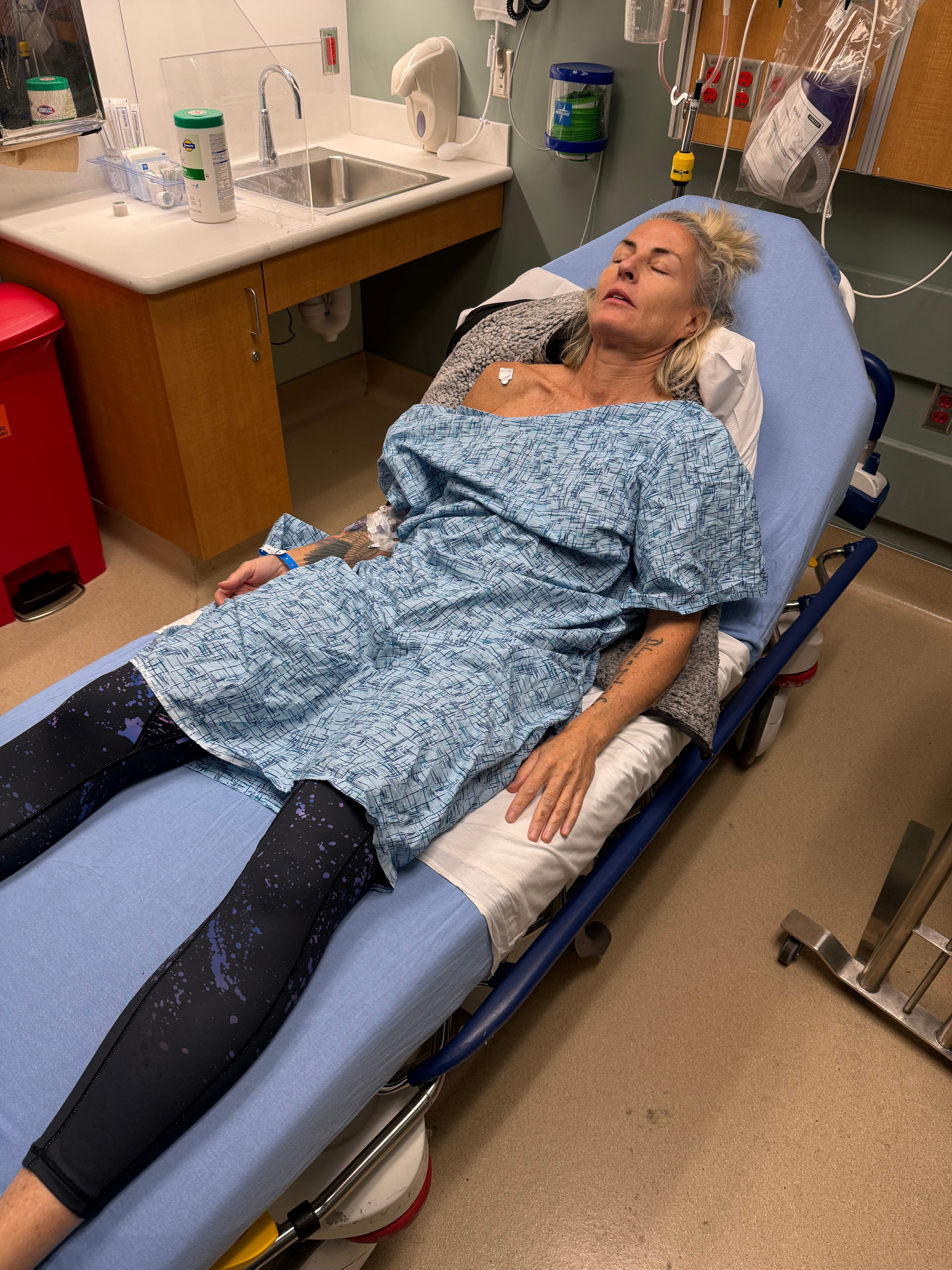
When I was told the ER “wasn’t aligned with the teachings,” my illness wasn’t treated as a medical event. It became a violation. My post wasn’t seen as communication — it was reframed as a threat. As researcher Paula Sweet explains in The Sociology of Gaslighting, this tactic destabilizes people by denying the legitimacy of their lived experience while claiming to be helpful.
In legitimate healthcare settings, transparency about symptoms is encouraged. In high-control wellness spaces, transparency becomes a liability. Vulnerability threatens the illusion of total wellness — and illusions must be protected at all costs.
The Punishment of Vulnerability
In a healthy community, someone saying “I ended up in the ER” sparks support, curiosity, or concern. But in groups shaped around a charismatic figure, vulnerability becomes destabilizing. It punctures the narrative that the leader’s philosophy is sufficient for all healing. It reveals the limits of the system.
What should have been met with compassion was met with correction — not because the individuals were cruel, but because the ideology demanded protection. I witnessed this behavior and even protected the environment several times while in this group.
Countless members were tossed out for either incongruent behavior (simply asking a question) or not seeing the picture as the founder hung it; you either bowed down, or you got the boot with no refund.

The Nervous System Cost of Being Controlled
Over the past nine months, I’ve cried (a lot), been curled up in a ball with pain, thought about all the ways I wish I could change my biology, started retraining my brain, and checked myself into therapy as my world became so dark. Polyvagal Theory, developed by neuroscientist Stephen Porges, explains what happened next with startling clarity. The nervous system constantly scans for cues of safety or threat. When someone who feels like a trusted figure suddenly moves into correction, judgment, or withdrawal of warmth, the vagus nerve shifts into a defensive state. My entire world changed overnight, and I got locked into a state of loss and threat.
This isn’t metaphorical. It’s mechanical.
My body interpreted the sudden criticism and emotional coldness as danger. According to Porges’s research, this can trigger dorsal vagal shutdown — faintness, collapse, dysregulation, and cognitive fog. This is especially pronounced in people with prior trauma or chronic illness.
The wellness world loves to talk about “nervous system regulation,” but often fails to understand the basic truth:
Relational harm dysregulates the nervous system more than any supplement can regulate it.
Conditional Worth: The Hidden Engine of Control
Another layer of harm emerges only after you step away, realizing your worth in the community was conditional. Not on your goodness, not on your expertise, not on your contributions — but on your compliance. It's been a true undertaking to reevaluate my relationship with myself. Not that the leader of this wellness group was the end all be all, but my relation to him was profound and unnerving all at the same time! He had and most likely still has this way about him that is calculated and charismatic, the kind that gets under your skin, and again, I didn't see until it was too late.
In high-control groups, women are often valued for their emotional labor, warmth, and reliability. But when they begin asserting needs, boundaries, or autonomy, that value can evaporate. Harvard psychologist Amy Cuddy has written about this in her work on “warmth-competence tradeoffs,” noting that women who stop performing agreeable roles often face backlash. THIS is precisely what happened to me. I began to ask for space and started saying no to his demands. I asked to take a break, and it was as if I was kicked out of the nest. Running an online group with more than 700 people is constant; there was no downtime, it was always going from the moment I woke to the moment I put my phone down to go to bed.
Maybe this is where I can also place some financial perspective, you can do the math, this was not a low-end group, $10-$25.00 a month group. These members were paying anywhere from $80-99 a month; you do the math. This group was no longer about supporting others' lives; it was a business, a straight-up cash cow.
Isolation Disguised as Insight
Leaving a wellness community — or being pushed out — can result in a 1,000% loss of identity. I never saw this coming. As sociologist Marc Galanter has written in his studies on new spiritual movements, such groups create a “psychological family structure” in which members depend on the group for meaning. I didn't see this either, yet there it was, we were a family, (saying no to big pharma, talking about the illusion of Covid, comparing fat loss and peptide stacks), we were all in together until I wasn't. The sudden withdrawal from this structure is experienced as abandonment, even when the group is the source of harm.
This isolation is not accidental. No one reached out to me; it's been months. I was an active, loud participant, people messaging me at all hours of the night, and then it became radio-silent. When belonging becomes conditional, people self-censor to maintain a connection. When dissent becomes pathology, people silence themselves. When vulnerability becomes “wrong energy,” people hide their truth.
The Surprising Physical Toll of “Wellness Harm”
The physiological consequences of high-control wellness environments are real:
elevated cortisol from chronic vigilance
autonomic dysregulation from relational threat
impaired immune function, as documented by psychoneuroimmunology research
disrupted sleep due to emotional suppression
increased inflammation from chronic social stress
In fact, a 2012 study by Segerstrom & Miller on stress and immunity found that chronic interpersonal stress has a more severe impact on immune markers than acute traumatic events. When someone inside a wellness space tells you your experience “isn’t aligned,” they’re not just hurting your feelings. They’re triggering a chain reaction that can affect your entire physiological system. What's even more bizarre is that the leaders of this wellness group truly believed they were so spiritual, yet their actions were not!
The Most Devastating Harm: Losing Yourself
Perhaps the most profound harm is the quiet internalization of doubt. You begin questioning your intuition, your reactions, your needs, and your interpretations. This is what cult theorists call “thought reform lite”—a slow erosion of self-trust.
It’s not dramatic.
It’s corrosive.
You stop speaking up.
You shrink to avoid correction.
You try to regulate your voice, your tone, your emotions.
These past few months, I've just begun to see that I lost my voice, the one that was bold and mouthy, the one who would get into trouble, the one who didn't care what others thought. I realized that because I've been so dysregulated, I have not been out and my world has shrunk, I don't want to be too much or take up too much space, which again, is so out of character for me. My tone and my emotions are all over the place, like I mentioned above, I cry a lot. My life has changed forever; I see the world differently.
I didn’t realize how much of myself I’d handed over until the harm became impossible to ignore.
Part Four is where the rebuilding begins — not in ascension, but in returning to the grounded, embodied truth that real wellness never demands your obedience, suppresses your humanity, or punishes your vulnerability.